
Soh Horie - Hibakusha
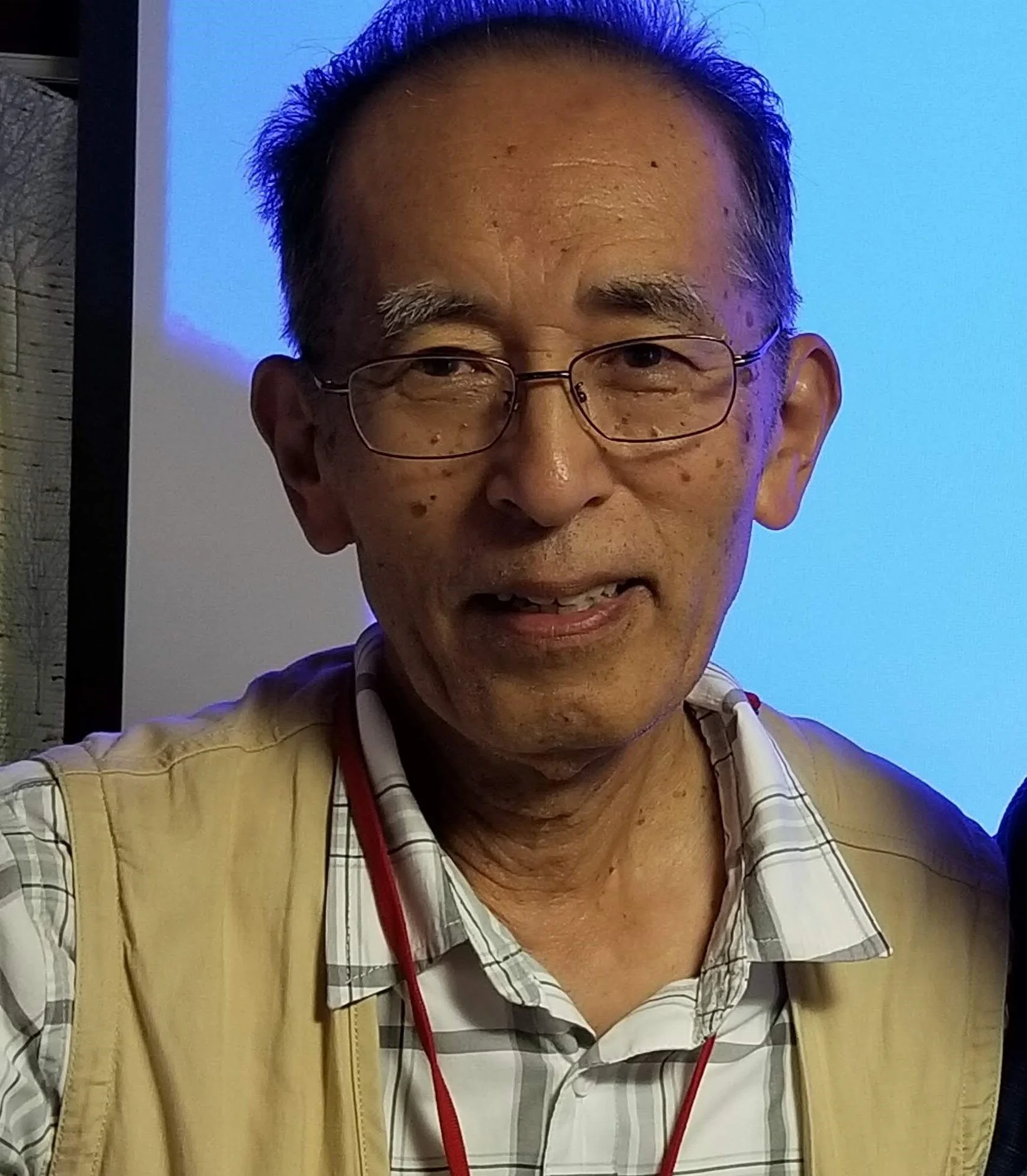
My name is Soh Horie. I am a Hibakusha, an atomic bomb survivor. I am 79 years old.
As one of hibakusha who has, through personal experience, suffered the impact of direct exposure to radioactivity from the A-Bomb, I hope no other people will suffer the same fate.
When I was five years old, I was exposed to the A-bomb explosion. I was 3 kilometers from the hypocenter. My elder sister, who was 15 years old, and I were walking on an errand in the neighborhood. Because of food shortages during the war, my sister was suffering from beriberi, (shortage of vitamin B1) and was absent from student mobilization for work duty.
We were walking along the hillside road, when all of a sudden a very bright light flashed. Next came an overwhelming blast of wind with big sound. We were almost blown away. My sister promptly covered me with her body and we lay face down on the road.
After some time, we went home and found that our house was leaning, although it was a large house with thick timbers, unlike present day houses. All the windows and sliding doors had been blown off by the blast. If the nuclear attack was a few minutes later, and if we had been out of the hillside road, we might have been killed by the flash of light and the blast. After a while, many people with badly burned skin hanging from their bodies, came to our house seeking shelter. Soon our broken house was filled with about 20 badly injured people.
I still remember two persons out of the large number of people there. One was a junior high school student. His face was completely burned, and his nostrils were clogged by peeled skin. He was breathing painfully through his mouth. My mother removed the skin out of his nostrils with tweezers. It looked very painful. He must have worn a cap at the time of the blast. The only part of his hair which remained was the part covered by his cap. The other person I remember was a young girl. She was burned and the patterns of her dress were printed on her arms.
Even small burns hurt very much. I wonder how badly those two children suffered from their burns. As our house was filled with evacuated people, I was playing in the field by the house. Then suddenly rain began to fall and there was a strong wind. It was, as we learned later, the black rain with radioactive particles. I hurried home. Among the laundry hung out to dry was my father’s underwear. It was stained black. My mother washed it many times but the stain did not come off. It was black dust that contained radiation. Many years later my mother and I had a talk and decided to donate the underwear to the Peace Memorial Museum. It is now a rare tangible example that shows the mark of black rain.
There was a shrine of Tenrikyo, one sect of Shintoism which is the Japanese traditional religion, in our neighborhood. As the houses near the shrine were on fire, the kami altar, the object of worship, in the shrine was carried to my house. A priest prayed for wounded people, Tasuke tamae, Kiyome tamae, Tenrio no mikoto. But he was unable to save anybody.
In the evening, my second sister, who had come back from an evacuation site, and I were taken to the villa of our aunt. The sky in the direction toward the center part of Hiroshima City was bright red, even after the sunset. Countless houses must have been on fire.
Dead bodies near our house were cremated in the playground of the elementary school, in which I myself was enrolled later. What I remember is only the revolting smell I had to endure all day long for about 1 month. Imagine what the smell was like if lots of decaying corpses were burned in the playground on a hot summer day with not enough fuel to cremate them properly. The playground was only 100 meters away from our house.
My father, who was a navy officer, was exposed to the A-bomb in the office near the hypocenter. He passed away six days later. A few days later two soldiers carried a white box to our house. I remember my mother broke down after the two soldiers saluted and left. At that time I could not understand what had happened to my father.
I would like you to remember that in Japan there were 164 thousand A- bomb victims and still many people suffer from the after-effects of the A-bomb.
And there are many Hibakusha in the world due to over 2050 nuclear weapons’ tests, nuclear waste from power plants, depleted uranium ammunition and many uranium mines.
Some 70 million people from all over the world visited Peace Memorial Museum since its opening in 1955. And so many people must have understood how terrible war is. However, wars and conflicts have not disappeared from the world.
Wars are still going on. I think we can’t stop wars unless we change our economic industrial systems and make new industries which can be beneficial for humankind. Many countries’ armies frequently move all over the world, especially in the Middle East and North-East Asia.
The U.S. needs an enemy to keep up their military-industrial complex that supports the economy of the nation. Without an enemy, much of the large defense budget cannot be justified.
Not only U.S. but also many other countries are producing and exporting weapons. If your friends or family want to start working in the military industry please talk to them.
The weapons industry will not create a peaceful world. Be part of an industry that will bring peace to your country and the world. Please create peaceful job or industries in your country.
In conclusion let me introduce my mother’s short poem:
My Mother’s Short Poem
Not knowing that my husband was seriously
injured, I was taking care of refugees.
I had a sleepless night.
When I met with a friend after a long
absence,
The only thing we talk about was the fate and whereabouts of our
acquaintances.
Every household in our neighborhood lost the head of their
family.
It happened in a moment on August 6th.
They say A- bomb survivors lost their hair and purple spots
emerged
I look at my skin every
morning.
Time passed and red canna flowers bloomed in a continuous chorus of
cicadas.
The dead people are going out of my
memories.
Let’s keep the world beautiful for the next generation. Thank you for reading the end of my testimony.